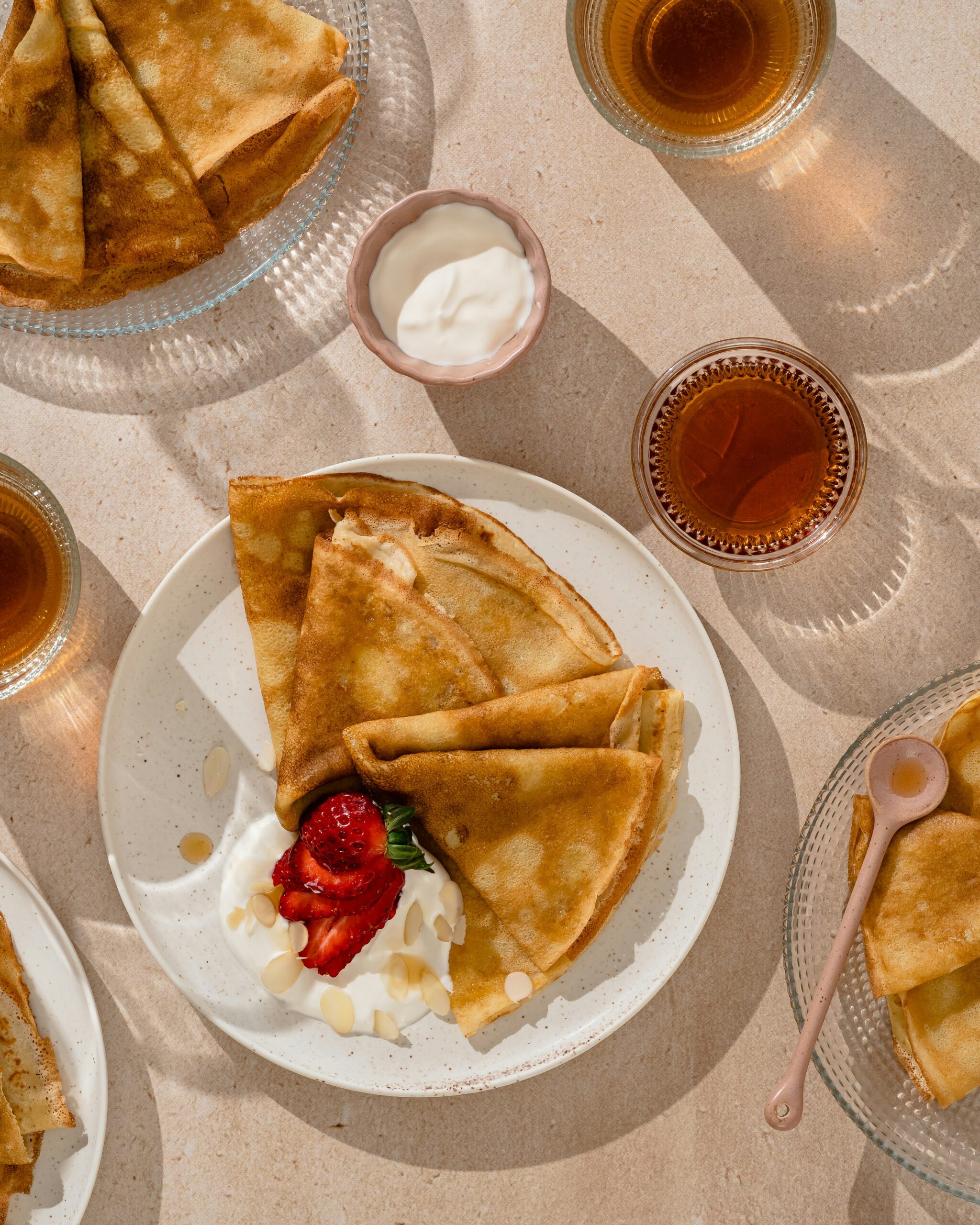
When people think of French street food, one dish consistently comes to mind: the crêpe. Simple, portable, and endlessly adaptable, crêpes in Paris are part of everyday life in France. They are not a trend created for visitors, but a food shaped by regional traditions, migration, and centuries of daily eating.
Eating crêpes in Paris may feel casual, but behind that simplicity lies a long and very French story.
one that explains why crêpes remain one of the most enduring and widely loved foods in the country.
A Regional Food Before It Ever Reached Paris
Crêpes did not originate in Paris. Their roots lie in Brittany, where soil conditions made wheat difficult to grow. Buckwheat, more resilient and nutritious, became a staple grain, giving rise to the galette
a savory crêpe cooked on a hot griddle and eaten as a complete meal.
For centuries, galettes were everyday food for farmers and fishermen. They were practical, filling, and based on what was locally available. Sweet crêpes, made with wheat flour, milk, eggs, and butter, developed later as ingredients became easier to access and were often linked to feast days and celebrations.
This distinction between savory galettes and sweet crêpes is historical, not stylistic and it still defines how crêpes are understood in France today.
How Crêpes Arrived in Paris (19th–20th Century)
Crêpes became part of Parisian food culture relatively late. During the 19th and early 20th centuries, large numbers of farmers, laborers, and tradespeople left rural regions particularly Brittany to seek work in Paris.
They brought their food traditions with them.
What began as home cooking soon appeared in the city through small, informal establishments created by Bretons for Breton communities. These were the first Parisian crêperies, and they focused on familiar, affordable food rather than culinary spectacle.
What Crêperies Were Originally
Early crêperies were not restaurants in the modern sense. They were functional, modest places centered on:
- Buckwheat galettes
- Simple, traditional fillings
- Cider instead of wine
Their purpose was to feed people far from home, not to attract attention. Over time, crêperies spread beyond Breton neighborhoods, and crêpes became part of everyday Parisian eating habits.
This is how crêpes moved naturally from regional food to Parisian staple.
Regional Influences That Shaped Crêpes in Paris
Once crêpes were established in Paris, other regions influenced how they were prepared and enjoyed. In Normandy, known for dairy farming and apple orchards, butter, cream, apples, and cider enriched crêpe fillings and batters. a tradition you can experience firsthand on our Normandy tour, where the flavors of the region come straight from the source.
Normandy did not introduce crêpes to Paris, but its ingredients helped shape their evolution adding richness and indulgence to an already well-established tradition.
Why Crêpes Became the Ultimate Paris Street Food
Crêpes fit city life perfectly. They are quick to prepare, easy to eat standing up, and satisfying without being heavy. These qualities allowed crêpes to move effortlessly from crêperies onto the street.
While some modern stands cater mainly to visitors, the tradition itself is authentic. Crêpes have always been food for everyday life—long before tourism played any role.
Eating the Best Crêpes in Paris Today
The best crêpes in Paris are rarely about elaborate toppings or long menus. Quality comes down to:
- Fresh batter made daily
- A properly heated griddle
- Simple, balanced ingredients
Whether savory or sweet, a good crêpe respects its origins and relies on technique rather than reinvention.
More Than Street Food
Crêpes represent something fundamental about French cuisine: respect for regional heritage, simplicity refined over time, and food that belongs to everyone. They are proof that some of France’s most meaningful dishes are also its most accessible.
Learn More and Taste for Yourself
Understanding the history behind French food adds depth to the experience of eating it. On our private Paris food walking tour, crêpes are one of several traditional foods used to explore how regional cuisine became part of Parisian daily life.
Join our private food tour in Paris to learn more about French food traditions and taste some of the best crêpes in Paris along the way.